What Makes a Quality Early Years Programme: Five Pillars Every Parent Should Know
A story of two classrooms, one mother's question, and five pillars that make all the difference when choosing an early years programme in Nepal.
One Mother's Question
Nisha sat on the verandah one evening, watching her two-year-old son, Aarav, line up his toy cars along the edge of the step. One by one, he placed them in a row and counted aloud: "One, two, three, four… five!" Then he looked up and smiled proudly.
She smiled back, but a worry was already sitting quietly in her mind. Next month, Aarav would begin school. And every school she had visited seemed to say the same thing: "We offer the best early years programme in Nepal."
How do I know which one is really good? she wondered.
That question is one that thousands of parents across the country ask every year. And it is a question worth asking, because the early years are not just the first chapter of a child's education. They are the foundation of the whole book.
The Years That Stay With Us for Life
It is often said that the experiences we have in our early years stay with us for a lifetime. This is not just a saying. Research on early childhood has shown clearly how much these years matter, and when and how children should be supported during them. In these years, a child's brain grows rapidly. Language, curiosity, confidence and the love for learning all begin to take shape.
This is why Nepal education is paying more and more attention to the early years. When the base is strong, everything built on top of it stands firm.
Many Roads, One Destination
The next day, Nisha visited two schools.
In the first school, she met a teacher who spoke warmly about Maria Montessori, and how children learn best when they can choose, touch and explore. In the second, the principal spoke about the play-way method, activity-based learning and experiential learning, all based on the idea that children learn by doing.
Nisha felt confused. "Which one is right?"
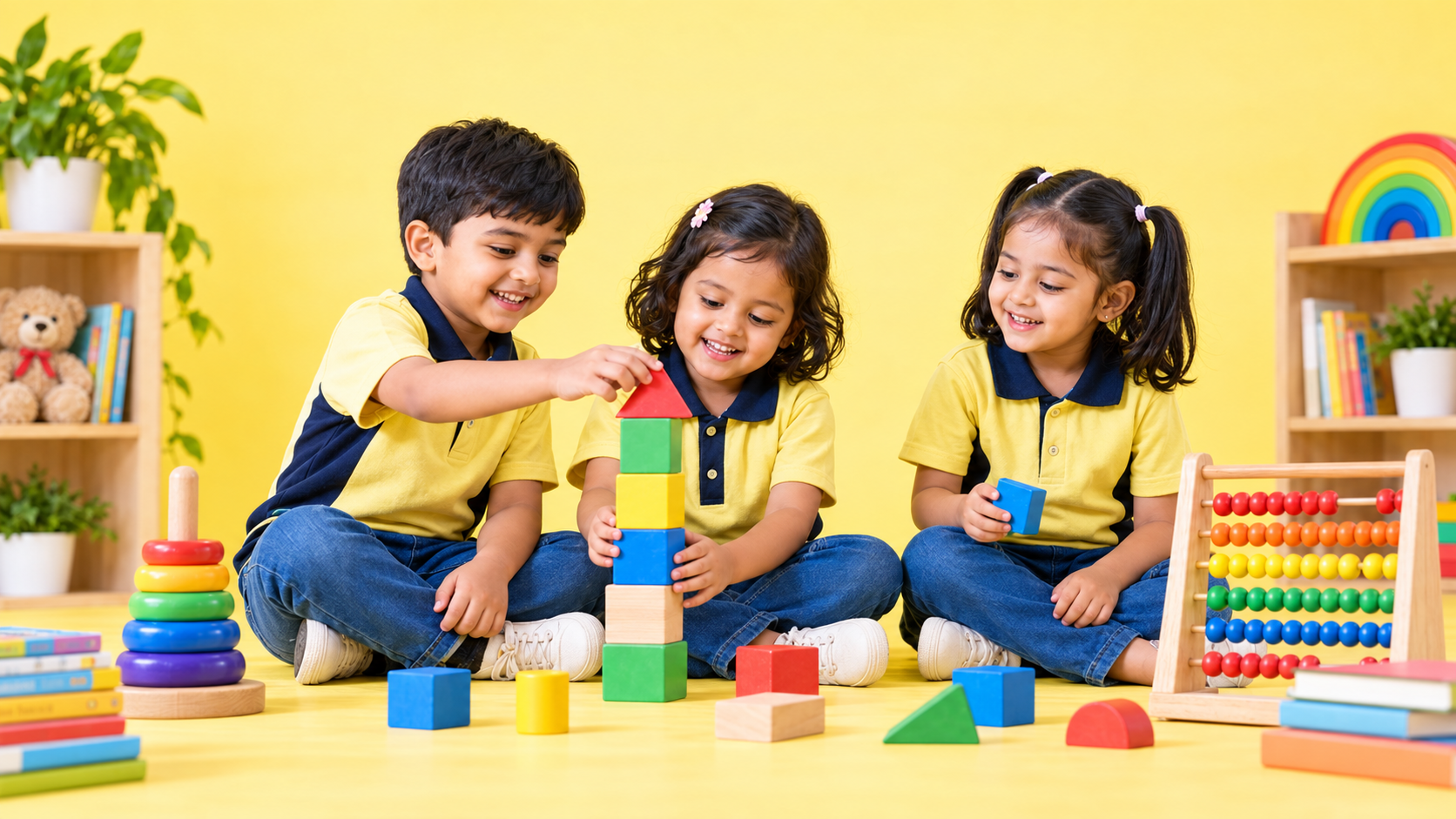
The truth is that the world of early childhood education has many wonderful approaches and theories. A school may begin with any one of them. But there is one thing all of them agree on: children learn best through experience. A child who plays with water understands more about "full" and "empty" than one who only reads the words. A child who sorts leaves in the garden understands "more" and "less" better than one who copies numbers from the board.
So the question is not only which method. The real question is: what makes a programme truly good?
Is It Only the Curriculum?
Nisha's neighbour, Meena, who is a teacher, gave her a thoughtful answer over a cup of tea.
"Many people think quality means a good book or an international standard," she said. "Those things matter. But they are only a part of the picture."
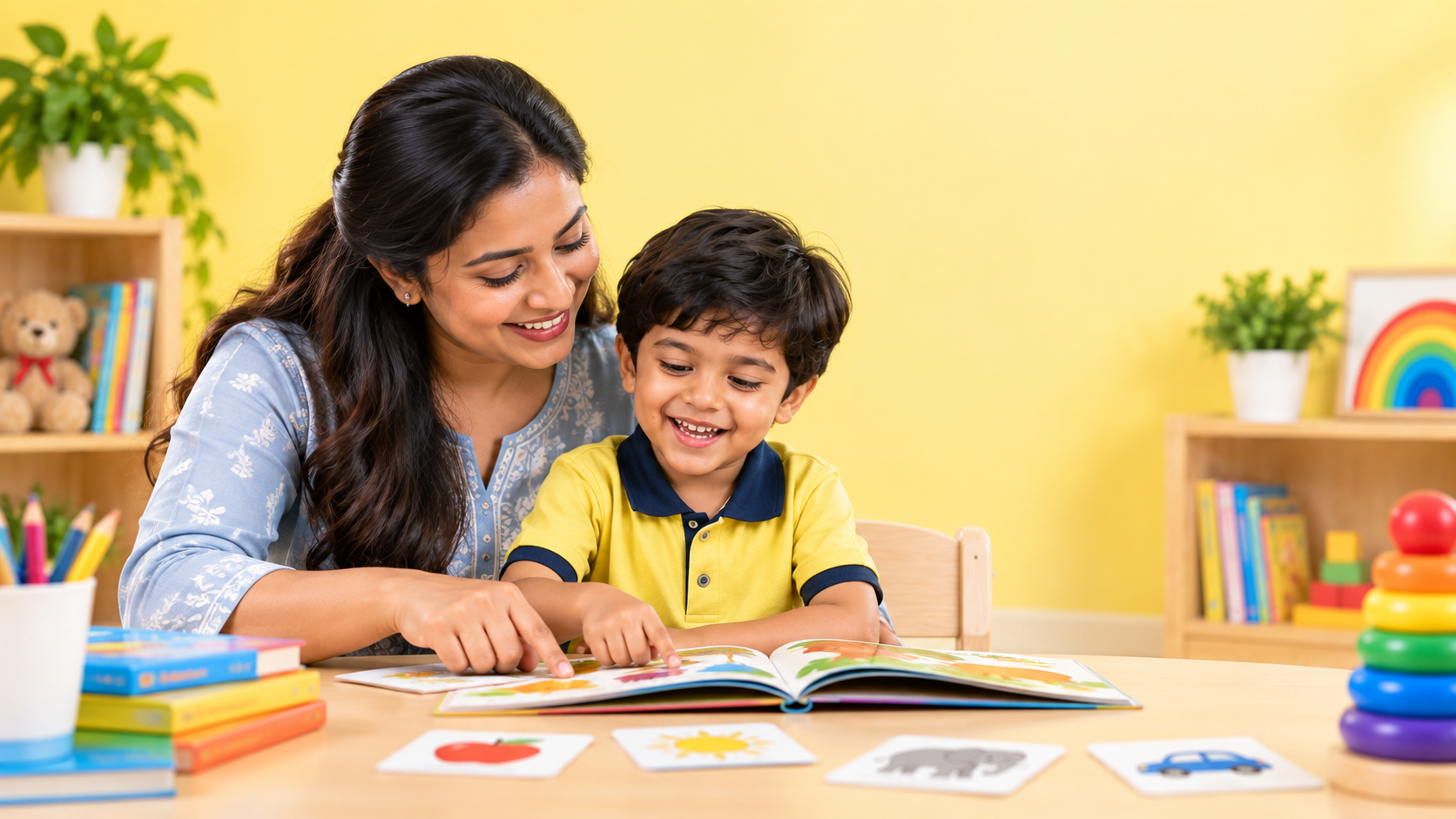
Then she explained something Nisha never forgot. A child's learning does not begin when the school bell rings. It begins at home, with a mother's lullaby, a father's story, a grandmother's questions. The school, the teacher, the curriculum and the family all together form an ecosystem. A good early years programme understands this and brings all of them together, so the child's learning continues smoothly, both in class and at home.
"So," Meena said, "when you look at a programme, look for these five pillars."
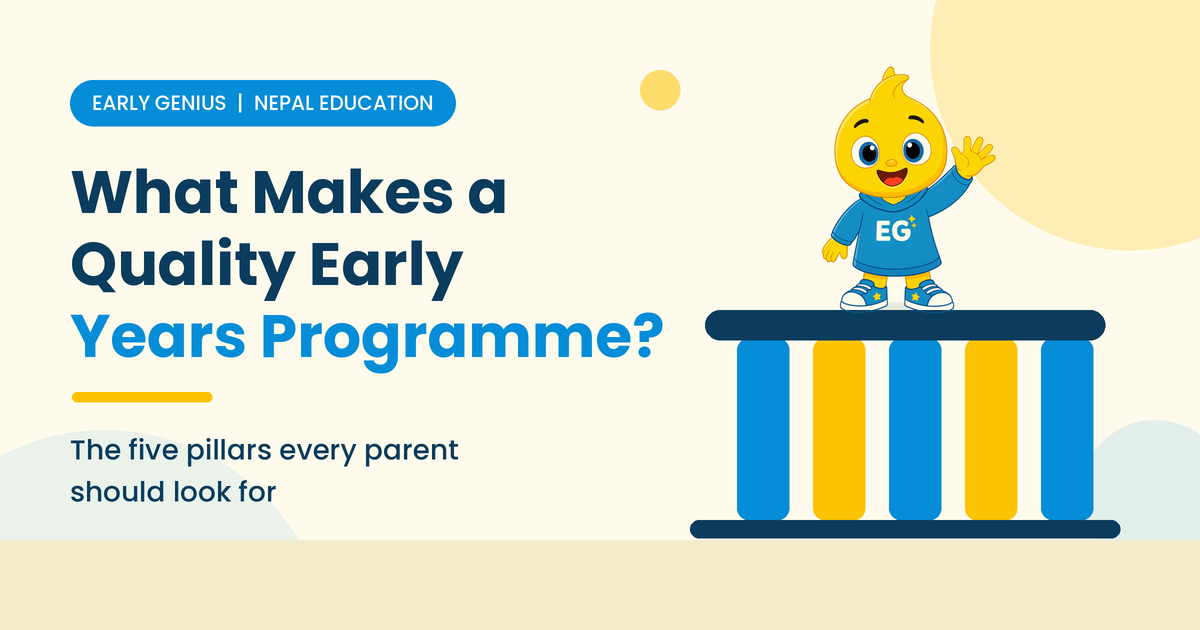
The Five Pillars of a Quality Early Years Programme
Pillar 1: It is built on research
Is the programme based on how children actually learn, or just on what looks attractive? A quality programme is guided by research on child development, so that every activity has a purpose and is right for the child's age.
Pillar 2: It has brand value and alignment
Is the programme trusted? Is it connected to a respected name and a clear vision? A strong brand brings confidence and consistency, and alignment means that what is promised, taught and assessed all fit together. For Nepal education, this also means a programme that suits our children, our classrooms and our context.
Pillar 3: It has a clear structure
Children feel secure when there is a rhythm to their day, and teachers feel confident when there is a path to follow. A good programme has clear levels, a smooth progression from one stage to the next, and a balance between play, learning and rest.
Pillar 4: It has a detailed curriculum
A curriculum is more than a list of topics. It tells teachers what to teach, how to teach it, and how to know whether the child has learned. Detailed lesson plans, activities and assessment make learning meaningful instead of random.
Pillar 5: It offers real support
Even the best curriculum needs support to come alive. Teachers need training, guidance and resources. Schools need people who walk beside them. Parents need to understand how they can help at home. A programme that supports everyone around the child is a programme that works.
Back on the Verandah
A few weeks later, Nisha sat again with Aarav on the verandah. This time, he was not only counting his cars. He was sorting them by colour, telling a little story about where each one was going, and asking, "Mummy, why is the red one faster?"
She laughed, and she realised something. She had chosen a school not because of a big signboard or a fancy promise, but because she had looked for the five pillars. And now she could see them at work in her little boy's curiosity.
A Final Thought
Choosing an early years programme is one of the most important decisions a family can make. Whether you are a parent, a teacher or a school leader, remember this: quality is not one single thing. It is research, trust, structure, curriculum and support, working together around the child.
At Early Genius, we believe every child in Nepal deserves a strong beginning, because the early years do not just prepare children for school. They prepare them for life.
Looking for an early years programme in Nepal that stands on all five pillars? Get in touch with Early Genius and give your child the foundation they deserve.