How to Choose the Right Preschool Curriculum for Your School in Nepal
Deciding on an appropriate preschool curriculum can be a challenging task for any school.
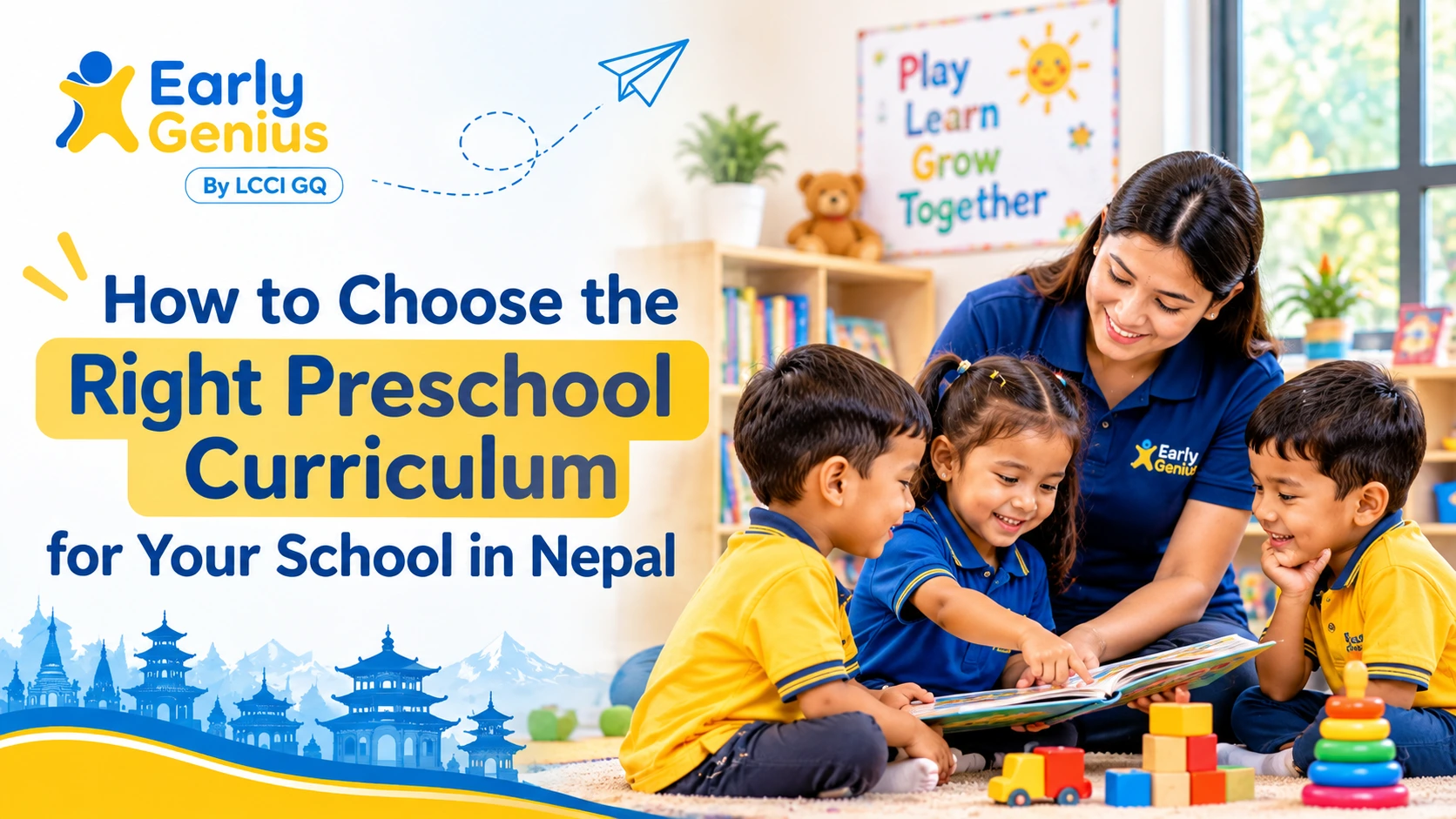
How to Choose the Right Preschool Curriculum for Your School in Nepal
Deciding on an appropriate preschool curriculum can be a challenging task for any school. Effective curricula are built on good principles and aim to set the starting point for children’s education, growth, and future learning. A proper curriculum helps educators with designing classes, and teaching children as well as creating a friendly environment for their education. If you are looking for an appropriate Preschool Curriculum in Nepal, you should look for one that contributes to the overall upbringing of the child and corresponds to the needs of contemporary preschool education.
1. Focus on Overall Child Development
A good preschool curriculum should support more than academic learning. Young children need opportunities to develop communication, creativity, social skills, emotional understanding, and physical abilities.
Schools should look for a curriculum that includes activities for different areas of development. Storytelling, drawing, group games, music, and hands-on learning can help children explore new ideas and build important skills.
2. Choose a Play-Based and Activity-Based Approach
Children learn naturally when they can explore, participate, and experience new things. A play-based and activity-based learning approach makes classroom lessons more interesting and interactive.
Activities such as puzzles, building blocks, role-playing, storytelling, and creative projects encourage children to think, communicate, and solve simple problems.
When selecting a Preschool Curriculum in Nepal, schools should consider whether the programme includes practical activities that make learning enjoyable and meaningful.
3. Check the Curriculum Structure
A well-organised curriculum should provide clear learning objectives, age-appropriate activities, and a planned progression of concepts.
Schools should check whether the curriculum includes:
- Age-appropriate learning materials
- Structured classroom activities
- Language and communication development
- Early mathematics and basic concepts
- Creative and physical activities
- Learning assessments and progress tracking
A structured Early Years Curriculum helps teachers organise lessons and maintain consistency across different classroom levels.
4. Consider Teacher Training and Support
Teachers play an important role in early childhood education. Even a well-designed curriculum needs proper implementation and classroom guidance.
Schools should choose a curriculum provider that offers professional development, teacher training, and ongoing academic support. Training helps teachers understand teaching methods, manage classroom activities, and support children's individual learning needs.
Regular guidance also helps schools maintain teaching quality and improve classroom experiences.
5. Look for Quality Learning Resources
Learning resources make classroom teaching more effective. Books, activity materials, teaching guides, digital content, and classroom resources help teachers introduce concepts in different ways.
Before selecting a preschool learning programme, schools should review the available resources and understand how they support the curriculum. The materials should be practical, engaging, and suitable for young learners.
6. Choose a Curriculum Partner That Supports Your School
A reliable curriculum provider should offer more than learning materials. Schools benefit from a partner that understands their requirements and provides support throughout programme implementation.
This may include curriculum guidance, teacher development, classroom resources, and regular academic support. A strong partnership can help schools improve their teaching approach and provide a better learning experience for children.
The Role of Early Genius in Preschool Education
Early Genius offers various types of integrated learning solutions to schools, which consists of curriculum and teaching methodologies from Oxford Advantage, CHAMP pedagogy, as well as other types of learning materials and training.
The approach focuses on providing engaging learning experiences in order to facilitate the development of preschool education programmes in schools that are interested.
Conclusion
It is necessary to pay attention to educational strategies, teaching materials, employee-based training programmes, and children’s overall development while selecting the appropriate preschool education programme. The good thing about this type of educational programme is that it includes both formal learning and creative activities while being beneficial at the same time. The proper preschool curriculum in Nepal will help schools facilitate their educational process.
Frequently Asked Questions
1. What should schools look for in a preschool curriculum?
Schools should consider age-appropriate learning activities, structured lessons, teaching resources, child development, and teacher training support.
2. Why is play-based learning important in preschool?
Play-based learning encourages creativity, communication, problem-solving, social interaction, and active participation.
3. How does teacher training support preschool education?
Teacher training helps educators understand curriculum objectives, improve classroom teaching methods, and create engaging learning experiences.
4. What is an early years curriculum?
An early years curriculum is a structured learning programme designed to support young children's cognitive, social, emotional, language, and physical development.
5. How can schools find a suitable preschool curriculum provider in Nepal?
Schools should review the curriculum structure, learning resources, teaching approach, teacher development opportunities, and ongoing support offered by the provider.